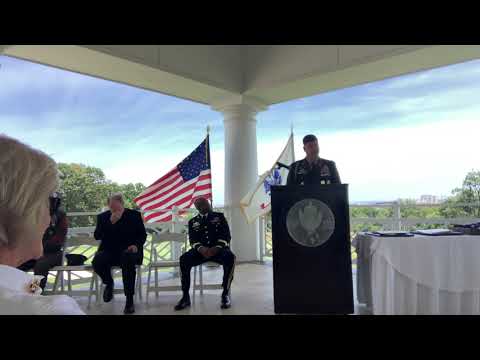
Eric Schnabel
Consultant
About
Eric Schnabel has shaped his career around the principles of service, discipline, and leadership across the military, government, and community. With decades of experience in uniform and continued involvement in national security efforts, he has earned respect and loyalty from those who have worked beside him. His dedication has remained constant throughout his professional journey.
Forging a Military Career
Eric began his service in 1995 by enlisting in the U.S. Army as an infantryman. With determination and commitment, he later earned his commission through the Virginia Military Institute, advancing from the enlisted ranks.
As a Mustang officer, he developed a thorough understanding of military operations from both tactical and leadership viewpoints. His qualifications included airborne training and Ranger certification, which led to six combat deployments across Iraq, Afghanistan, and the Persian Gulf.
Eric later served as a paratrooper with the 101st and 82nd Airborne Divisions. Over 10 years of jump status, he completed 82 jumps and was awarded Master Rated Airborne Wings, reflecting his long-standing service in the airborne.
Leadership in Combat and Unit Operations
With increasing responsibilities, he led troops in multiple combat environments. He commanded ground forces during Operation Iraqi Freedom and throughout several deployments to Afghanistan. His leadership included capturing enemy combatants, directing operational maneuvers, and maintaining team cohesion through extended conflict.
In the 82nd Airborne Division, he held the positions of Battalion Operations Officer and Executive Officer. He was responsible for leading and managing operations involving over 800 personnel and later supported a 770-person parachute infantry battalion. His efforts in logistics, training, aviation support, and planning earned him multiple Bronze Star recognitions for performance and leadership.
A Strategic Influence at the Pentagon
As his career progressed, he shifted to strategic and interagency roles. He served in key assignments with the Office of the Secretary of Defense Staff, Joint Staff, and Army Staff, collaborating with senior defense leaders on high-level initiatives.
In his role as Deputy Director and Chief of the Assessments Branch on the Joint Staff, he led capability assessments and concept development efforts across various branches and commands. He also contributed to planning and coordination under the Under Secretary of Defense for Intelligence, focusing on integrating operations and technology into national security.
Eric also served as Director of Joint Integration for the Office of the Secretary of Defense, supporting the Close Combat Lethality Task Force. In this capacity, he worked with the Army, the Marine Corps, the Navy, Special Operations Command, and others to improve close-combat capabilities. He played a vital role in securing funding for research, equipment, and training initiatives.
Transition to Civilian Leadership
After more than 25 years of military service and retiring as a Lieutenant Colonel, he transitioned into civilian roles with the same focus and commitment. He worked in business development, supporting organizations aligned with the Department of Defense, the Department of Homeland Security, and the Department of Veterans Affairs.
Drawing on his military background, he helped develop strategic pipelines, expand operational markets, and guide teams through competitive processes. His disciplined, mission-oriented mindset remained central to his civilian career.
Commitment Beyond Profession
In addition to his professional contributions, he has remained active in community service. He spent 15 years with the Knights of Columbus, held a leadership role at the Army-Navy Country Club, and served as President of his neighborhood homeowners' association.
Eric also served on the Board of Governors and as President of the club’s nonprofit foundation. In these roles, he supported efforts to preserve military heritage and provided leadership in supporting staff programs and educational outreach.
His involvement in creating the Medal of Honor Library helped preserve recipients' stories and further the club’s mission to honor military history.
Eric Schnabel’s Personal Legacy
While his professional accomplishments are significant, he holds his family life in the highest regard. With more than two decades of marriage and great pride in his daughter, he considers these relationships his most meaningful legacy.
Throughout his journey, he has remained guided by the values that have defined his service, commitment, and integrity. Whether in combat, at the Pentagon, or in civilian and community roles, Eric Schnabel's life stands as a reflection of continued service to others and dedication to purpose.